Qatar Red Crescent Society (QRCS) has launched an emergency relief intervention to help the families affected by the recent 6.0-magnitude earthquake in Kunar province, eastern Afghanistan, which left behind more than 5,840 casualties, destroyed thousands of homes, and displaced many locals, especially in remote mountainous villages and inaccessible areas.
The project is aimed at effectively responding to the critical needs of the families most affected by the devastating earthquake in Nurgal and Suki districts of Kunar province, by providing direct support for approximately 7,600 affected families, or 53,200 persons, as well as indirect support for the surrounding local community to mitigate the impact of the disaster and enhance the resilience of the affected populations.
With a budget of QR 2 million ($547,945), phase one involves food and nonfood aid for 33,200 beneficiaries and health care services for 20,000 beneficiaries.
It will be implemented under the supervision of QRCS's office in Afghanistan, in collaboration with the Afghan Red Crescent Society (ARCS), and in coordination with local authorities and international clusters to ensure integration, avoid duplication, and maximize the outcomes.
Just in the wake of the disaster, QRCS's Disaster Information Management Center (DIMC) was activated to keep updated on the situation and coordinate with ARCS and international humanitarian organizations.
A QRCS field team visited the affected areas in Kunar, to conduct a firsthand needs assessment, identify damage, and prioritize the intervention in coordination with national and international humanitarian agencies.
In a statement, Faisal Mohamed Al-Emadi, Secretary-General of QRCS, said, “In a terrible humanitarian tragedy, entire villages were turned into rubble by the earthquake that struck several provinces of Afghanistan on 31 August 2025. Dozens of lives were lost, hundreds of injured people have no medication or shelter, and thousands of families suddenly became homeless, without a roof over their heads or food for themselves and their children. It is a real disaster that befell poor and helpless people, who are currently desperate for a swift helping hand from every compassionate person who can lend one".
He explained that phase 1 of the campaign involved an immediate humanitarian relief to save lives and alleviate the suffering of earthquake-affected families, by providing food, clean drinking water, health care services through mobile clinics, and shelter kits.
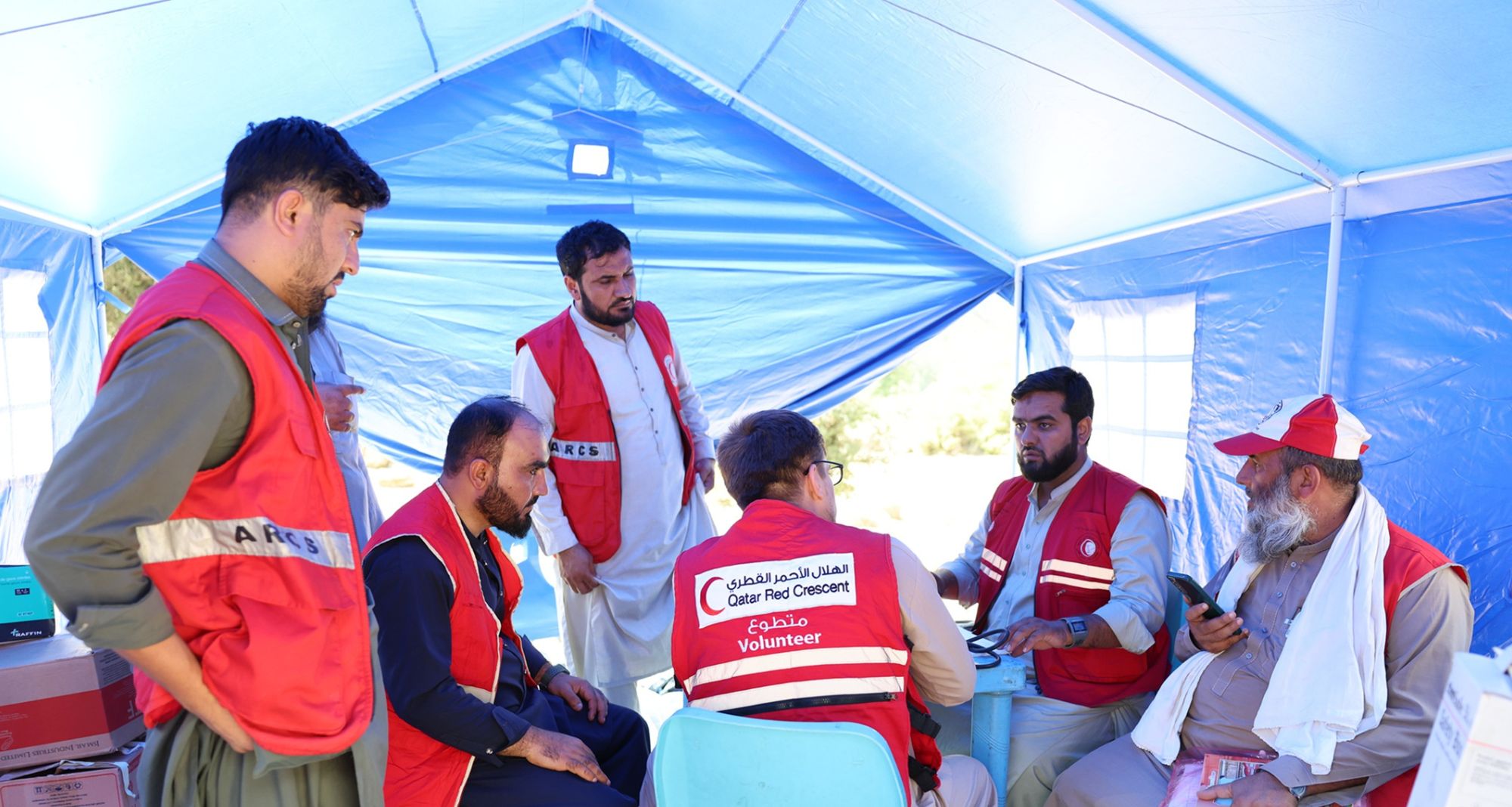
“After this, there will start the early recovery phase, with more sustainable development projects, including the distribution of food parcels, sponsorship and care for orphans, medications for patients with kidney failure, livelihood enhancement for poor families, and digging of water wells," Mr. Al-Emadi added.
To ensure timely implementation and alignment with local needs, QRCS is closely coordinating with ARCS, Afghan government authorities, and leaders of host communities. This includes a rapid field assessment in Kunar to identify the worst hit families and develop beneficiary lists. Priority will be given to the most vulnerable families, female breadwinners, and inhabitants of remote mountainous areas.
After that, the food, water, shelter, and hygiene materials will be purchased as per the established procurement policies, while ensuring timely delivery. The materials will then be transported from central warehouses to distribution hubs in the target districts, with the quality and quantity of materials being verified prior to distribution.
To ensure transparency and accountability, the beneficiaries and local community representatives will be engaged in all steps of implementation, with QRCS's team in Afghanistan making regular field visits to monitor timeline and implementation plan.
Afghanistan remains in one of the world's most complex humanitarian crises, being among the most disaster-prone Asian countries due to its geographical location in an active seismic zone, along with frequent droughts, floods, and landslides.
According to the Humanitarian Needs and Response Plan 2025 (HNRP) issued by the United Nations Office for the Coordination of Humanitarian Affairs (OCHA), between 23 and 28 million people – more than two-thirds of the population – are in urgent need of humanitarian assistance.
It is estimated that 48% of the population lives below the poverty line, while approximately 62% suffer from multidimensional poverty, including health, education, and housing.